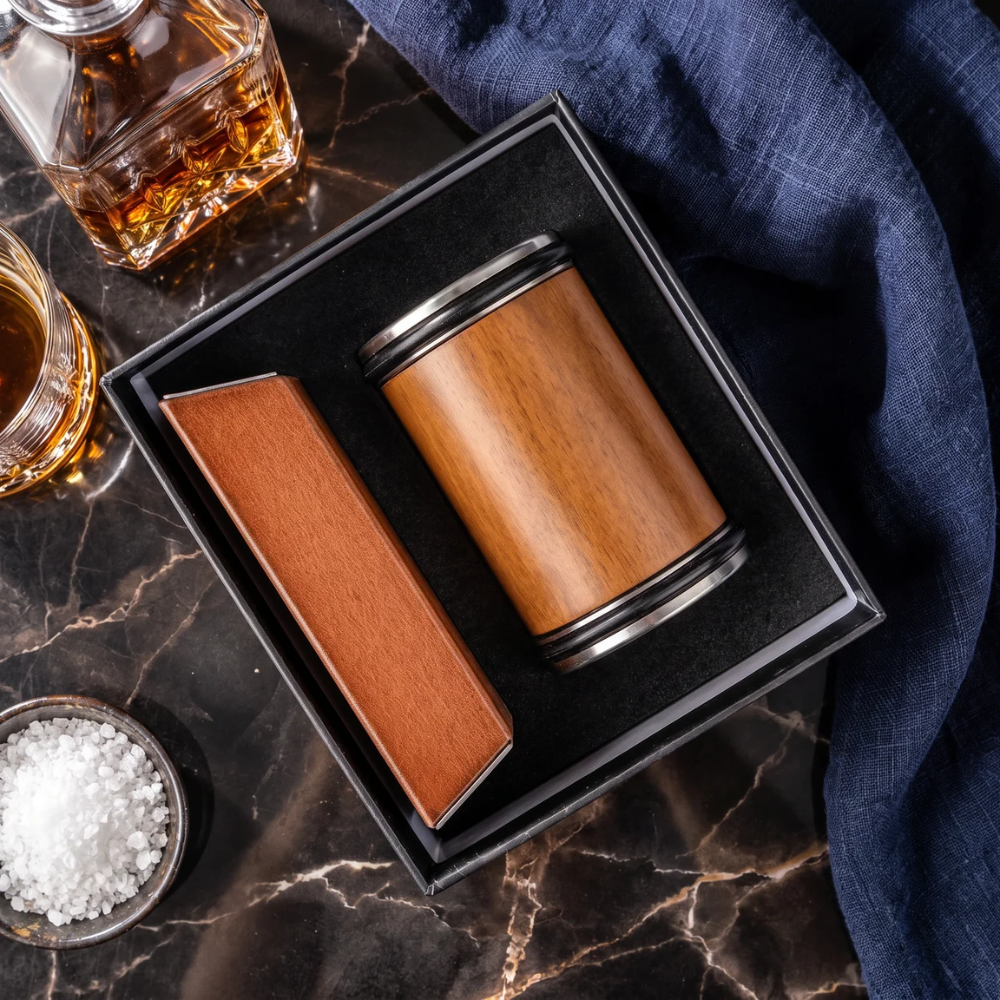
Stovenix™ Knife Sharpener
- Razor-sharp edge in 30 seconds
- Anyone can use it, no skill needed
- Real diamond coating
- Gentle on knives, built to last
Couldn't load pickup availability
30 Day Money Back Guarantee
Try Stovenix™ for 30 days. Not convinced? Full refund, no questions asked.
stovenix™ is knife sharpening without the guesswork. Attach the magnetic base, roll the sharpener along the blade, and the diamond-coated disc finds the edge for you. No stones, no angle guides, no learning curve.
The rolling motion keeps the same angle on every pass, so the edge comes back even and consistent instead of uneven and over-ground. That is what turns a chore most people avoid into something done in under a minute, right at the counter.
Built from a real diamond-coated disc and a solid magnetic base, so it keeps its edge-forming power long after a cheap pull-through has gone dull. Works on stainless steel, carbon steel and Japanese blades alike. Fits kitchen knives, chef's knives and outdoor blades of any size.
- ✓ 1 x stovenix™ rolling knife sharpener
- ✓ 1 x magnetic base
- ✓ 30 day money back guarantee
- ✓ Free shipping
Free shipping
We ship free to your door with no extra costs at checkout. Orders are processed within 1 to 3 business days, and delivery takes a further 5 to 9 business days.
Easy returns
If you are not fully satisfied, email us at info@stovenix.com within 30 days and we will sort it out.

Sharpening Is Not The Hard Part. Holding The Angle Is.
Every time you have tried a stone, your wrist moved. Two degrees here, five degrees there, and the edge comes off rounded instead of sharp. That is not a skill you are missing. It is something hands are simply bad at.
stovenix™ takes the angle out of your hands completely. The magnetic base holds the knife still, and the roller sets the angle, 15 or 20 degrees depending on which face you use. Every pass lands in exactly the same place as the one before it, because you are not the one choosing where it lands.
You do not learn to sharpen. You skip it.
You Were About To Replace This Knife.
Same blade, thirty seconds apart. A new knife costs more than this sharpener does, and in a year it looks exactly like the left side. You would be buying the same problem twice.
Before
After
Frequently asked questions
Yes, with one honest limit. The disc is coated in industrial diamond, which is harder than any knife steel, and the rolling motion holds that disc at a fixed angle so every pass lands in the same place. A dozen or so passes down each side and a dull kitchen knife will slice paper again. What it will not do is rescue a blade with a chipped or badly rolled edge. That needs proper metal removal on a stone first, and anyone telling you a rolling sharpener fixes chips is selling you something.
This is the part everyone worries about, and it is the part the tool takes off your hands. The magnetic base holds the blade steady, the angle is built into the roller, and there is no wrist position to get wrong the way there is on a stone. You roll it down the edge with light pressure and that is the whole technique. If you find yourself pressing hard, you are pressing too hard.
Twenty for most kitchens. It gives a stronger edge that survives cutting boards, bones and outdoor use. Fifteen is for high quality Japanese and Damascus steel where you want a finer edge for precise work. If you genuinely do not know which yours is, use 20. A slightly sturdier edge on a fine knife is a much smaller problem than a fragile edge on a knife that works hard.
No. Pull-through sharpeners chew metal away because the carbides are fixed and the angle is whatever your wrist happens to do that day. This takes off a thin, even layer at a controlled angle, which is what a whetstone does, just without the years of practice. Every sharpening removes some steel by definition. What matters is how much and how evenly, and this is on the gentle end of both.
Yes, on the 15 degree side. That is exactly what it is there for. One thing to check first: a few traditional Japanese knives are ground on one side only, a yanagiba or usuba for example. Those need a different approach and this is not it. If your knife is bevelled evenly on both sides, which covers almost every gyuto, santoku and chef's knife sold here, you are fine.
No, and be careful of anyone claiming otherwise. Serrations have to be sharpened one tooth at a time with a tapered rod. A flat disc rolling along the edge only ever touches the tips of the teeth and never reaches the scallops between them. Your bread knife stays a job for someone else.
Around 30 seconds a knife once you have done it two or three times. The first one takes longer because you are being cautious, which is the right instinct. Most people end up doing the whole knife block in one go while the kettle boils.
For most home kitchens, yes. If you are the sort of person who enjoys a full stone progression on a Sunday morning, this will not replace that and it is not trying to. What it replaces is the far more common situation: you own a stone, you have used it twice, and your knives have been dull for a year and a half.
Years of normal home use. Diamond is the hardest material on earth, so the coating stays cutting long after the abrasives on cheaper sharpeners have gone smooth. Wipe it dry after use, keep it away from anything harder than a knife blade, and it will outlast most of the knives you use it on. Replacement discs are available if you ever wear one down.